
As the global demand for renewable energy continues to surge, solar tracking system technology has emerged as a critical solution for maximizing photovoltaic (PV) energy harvest. Unlike fixed-tilt installations, a dual-axis solar tracking controller actively adjusts panel orientation throughout the day to follow the sun’s path, potentially increasing energy yield by 25–45% compared to stationary systems. This article explores the working principles of several common solar tracker controller architectures and examines their practical deployment in commercial and utility-scale projects.
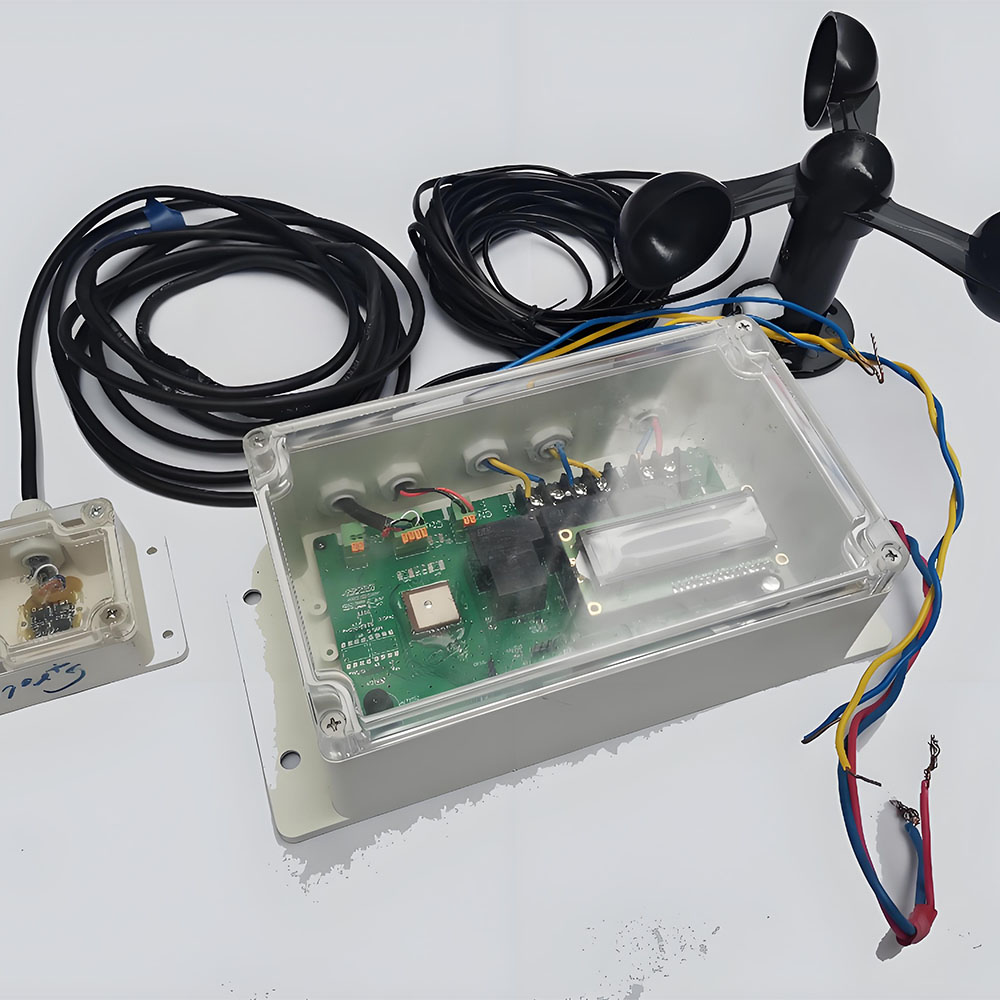
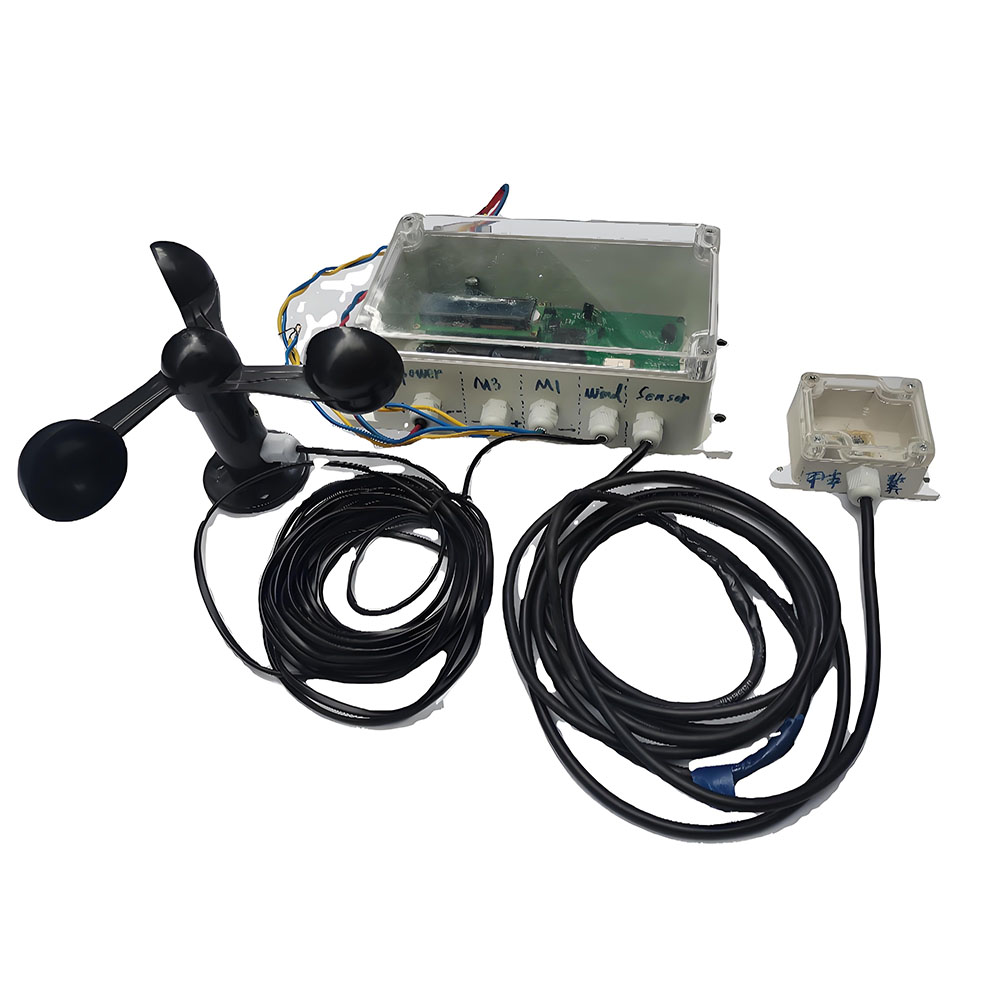
1. Astronomical (Algorithm-Based) Solar Tracking Controller
The astronomical solar tracking controller represents the most widely adopted approach in modern dual-axis installations. This controller relies on pre-programmed astronomical algorithms that calculate the sun’s precise position based on geographic coordinates (latitude, longitude), date, time, and local timezone.
Working Principle: The controller utilizes embedded GPS modules or manually input coordinates to determine the site’s exact location. Using astronomical equations—typically the SPA (Solar Position Algorithm) or PSA (Plataforma Solar de Almería) algorithm—it computes the sun’s azimuth and elevation angles in real-time. The solar tracker controller then drives azimuth and elevation motors (usually DC motors with encoder feedback or stepper motors) to align the PV modules perpendicular to solar rays. Advanced systems incorporate real-time clocks (RTC) with battery backup and GPS synchronization to maintain accuracy during communication outages.
Application Case: NEXTracker, a leading solar tracking system manufacturer, deployed its NX Horizon dual-axis controllers across the 850 MW Mount Signal Solar project in California’s Imperial Valley. The astronomical solar tracking controller systems optimize panel angles every few minutes, achieving capacity factors exceeding 30%—significantly higher than fixed-tilt equivalents in the same region. The controllers communicate via wireless mesh networks, enabling centralized monitoring and firmware updates across thousands of tracking units.
2. Optical Sensor-Based Solar Tracking Controller
Optical sensor-driven solar tracker controller systems represent a direct-measurement approach that does not rely on astronomical calculations. These controllers use photosensitive sensor arrays—typically photoresistors, photodiodes, or quad-photocell configurations—to detect the brightest point in the sky.
Working Principle: The sensor array is mounted on the tracker plane itself. When the sun’s position changes, differential illumination across the sensors generates analog voltage signals. The solar tracking controller reads these signals through ADC channels and executes a feedback control loop: if the east-side sensor receives more light than the west-side sensor, the controller drives the azimuth motor eastward until illumination balances. Elevation adjustment follows the same principle using north-south differential sensors. This closed-loop approach automatically compensates for installation alignment errors and adapts to local atmospheric conditions.
Application Case: In distributed commercial rooftop installations across Australia, small-scale dual-axis trackers from companies like SunPower employ optical solar tracker controller systems. These units are particularly effective in urban environments where GPS signals may be partially obstructed by surrounding structures. The sensor-based approach provides robust tracking performance without requiring precise geographic calibration, making installation faster and reducing commissioning costs for systems under 50 kW.
3. Hybrid Astronomical-Sensor Solar Tracking Controller
Hybrid solar tracking system controllers combine the strengths of both astronomical algorithms and optical sensors, offering superior reliability under variable weather conditions. This architecture has become the preferred solution for utility-scale dual-axis trackers operating in climates with frequent cloud cover.
Working Principle: Under clear-sky conditions, the astronomical solar tracking controller provides primary positioning guidance, ensuring smooth, predictive motor movements without hunting behavior. When clouds obscure the sun, the optical sensor array detects diffuse light patterns, and the controller switches to sensor-priority mode to locate bright cloud edges or direct beam breakthroughs. The controller’s firmware implements a weighted decision algorithm that evaluates sensor confidence levels against predicted astronomical positions. If sensor readings deviate significantly from expected values (indicating overcast conditions), the system defaults to astronomical tracking to prevent erratic movements caused by scattered light.
Application Case: Array Technologies’ DuraTrack HZ v3 dual-axis solar tracking controller utilizes hybrid control logic across multiple gigawatts of installed capacity, including the 2.25 GW Villanueva Solar Park in Mexico—one of the world’s largest PV installations. The hybrid solar tracker controller architecture maintains optimal energy capture during the region’s variable monsoon-season weather patterns, where purely optical systems would suffer from tracking instability. The system reports enhanced performance ratios during partly cloudy days compared to single-mode controllers.
4. Active Feedback Motor Control Systems
Modern dual-axis solar tracking system implementations increasingly employ sophisticated motor control architectures that integrate current sensing, encoder feedback, and wind-load monitoring. These active feedback solar tracker controller systems prioritize mechanical safety and longevity alongside tracking accuracy.
Working Principle: The controller continuously monitors motor current draw through Hall-effect sensors or shunt resistors. Anomalous current spikes indicate mechanical obstruction or excessive wind loading, triggering automatic stow commands that return the tracker to a horizontal or wind-resistant position. Rotary encoders or absolute position sensors provide closed-loop position verification, ensuring the controller maintains accurate panel orientation even after power interruptions. Advanced solar tracking controller units incorporate anemometers and wind-speed thresholds: when wind velocity exceeds programmed limits (typically 15–20 m/s), the system overrides normal tracking to execute emergency stow protocols, protecting mechanical drivetrains and module integrity.
Application Case: Soltec’s SF7 dual-axis tracker, deployed across European utility-scale projects including the 500 MW Francisco Pizarro plant in Spain, employs active feedback solar tracker controller systems with integrated wind-stow functionality. The controllers monitor wind loads in real-time and automatically adjust tracker tilt to minimize sail effect during storms. This protective intelligence has proven critical in regions experiencing seasonal high-wind events, reducing structural fatigue and maintenance requirements while maintaining 99.5% system availability.
5. IoT-Enabled Smart Solar Tracking Controllers
The latest generation of solar tracking system controllers leverages Internet of Things (IoT) connectivity and edge computing to enable predictive maintenance, fleet-wide optimization, and grid-integration capabilities. These smart solar tracker controller units represent the convergence of renewable energy hardware and digital energy management platforms.
Working Principle: Each controller operates as an intelligent node within a wireless communication network (LoRa, Zigbee, or cellular NB-IoT). Beyond basic tracking functions, the controller logs performance data including motor duty cycles, energy yield per tracking position, backtracking angles to prevent row-to-row shading, and weather correlations. Cloud-based analytics platforms process this data to optimize backtracking algorithms, schedule predictive maintenance based on motor current signature analysis, and generate grid-friendly generation forecasts. Some advanced solar tracking controller systems now integrate with energy storage management systems, coordinating tracker positioning with battery charge/discharge cycles to maximize grid-value capture.
Application Case: Nextracker’s TrueCapture smart control system, deployed across 70+ GW of global solar tracking system capacity, demonstrates the commercial viability of IoT-enhanced solar tracker controller technology. The system uses machine learning algorithms trained on site-specific weather and terrain data to optimize backtracking angles beyond standard geometric calculations. In the 200 MW Garland Solar project in Texas, TrueCapture increased annual energy production by 2–6% compared to conventional astronomical controllers, demonstrating that intelligent software layers atop hardware tracking infrastructure can extract additional value from existing PV assets.
Conclusion
The evolution of solar tracking controller technology from simple timer-based mechanisms to sophisticated hybrid, feedback-enabled, and IoT-integrated systems reflects the maturation of the solar industry. Whether employing astronomical precision, optical responsiveness, or intelligent hybrid strategies, the modern solar tracker controller serves as the critical intelligence layer that transforms passive PV modules into active energy-harvesting systems. As bifacial modules and agrivoltaics expand the addressable market for solar tracking system technology, controller innovation will continue driving the efficiency frontier of utility-scale solar deployment worldwide.