
Введение
The global solar tracking system market is experiencing unprecedented growth in 2026, driven by ambitious renewable energy targets, declining technology costs, and the urgent need for grid stability. As utility-scale solar deployment accelerates worldwide, solar trackers have become essential components for maximizing energy yield and improving project economics. This article examines the top 10 countries leading solar tracker installations in 2026, analyzes the market share between single-axis and dual-axis technologies, and explores the parallel development of concentrated solar power (CSP) projects.
Global Market Overview
The solar tracker installation market reached USD 10.40 billion in 2025 and is projected to grow at a compound annual growth rate (CAGR) of 15.0% through 2035, ultimately reaching USD 41.07 billion. This robust expansion reflects the technology’s proven ability to increase energy production by 15-25% compared to fixed-tilt systems, making solar trackers indispensable for modern utility-scale projects.
Single-axis solar trackers dominate the market with an 86.81% share in 2026, valued at approximately USD 37.98 billion. These systems track the sun’s movement along one horizontal axis (east to west), capturing most daily irradiance improvements while maintaining cost-effectiveness. Horizontal single-axis trackers alone account for 70.1% of 2025 revenue, driven by their synergy with bifacial modules and established bankability.
Dual-axis solar trackers, while holding a smaller market share, are experiencing the fastest growth with a CAGR of 17.32% (or up to 29.20% according to some analysts). The dual-axis market is projected to grow from USD 7.43-8.23 billion in 2025-2026 to over USD 53 billion by 2035. These systems maximize energy capture by tracking both horizontal and vertical sun movements, increasing yields by 30-40% compared to fixed-tilt configurations.
Top 10 Countries for Solar Tracker Installations in 2026
1. China
China leads the global solar tracker market, driven by massive utility-scale deployment in western and northern regions. The country’s aggressive renewable energy policies and manufacturing capabilities have established it as both the largest producer and consumer of solar tracking systems. China’s CSP market alone is projected to reach USD 4.85 billion by 2026, reflecting substantial concentrated solar thermal investments alongside photovoltaic tracking systems.
2. United States
The U.S. represents the second-largest market, with strong growth supported by the Inflation Reduction Act and state-level renewable mandates. Array Technologies and Nextracker, two leading U.S. tracker manufacturers, are advancing AI-driven control systems that optimize energy yield and reduce operations and maintenance costs. The U.S. CSP market is valued at USD 1.54 billion in 2025 and expected to reach USD 7.17 billion by 2032, with the Department of Energy targeting USD 0.05/kWh for baseload plants with 12+ hours of thermal storage.
3. India
India’s aggressive 2030 renewable energy targets position it as the fastest-growing regional market with a 22.8% CAGR. The country launched 870 MW of battery storage systems in Gujarat in May 2026, demonstrating integrated solar-plus-storage strategies. India’s CSP market is projected to reach USD 1.44 billion by 2026, supported by government initiatives and large-scale grid integration projects.
4. Spain
Spain remains Europe’s leading solar tracker market, benefiting from high solar irradiance and mature regulatory frameworks. Spanish companies like Soltec and PVH are global tracker leaders, collectively holding significant market share alongside Nextracker and Array Technologies. Spain also leads European CSP deployment, with parabolic trough systems representing the dominant technology.
5. Brazil
Brazil’s solar tracker market is expanding rapidly in Latin America, driven by excellent solar resources and growing utility-scale development. The country’s tracker installations benefit from bifacial module adoption and terrain-adaptive tracking technologies optimized for non-uniform landscapes.
6. Saudi Arabia
Saudi Arabia represents the Middle East’s largest solar tracker market, with massive gigawatt-scale projects under development. The kingdom’s Vision 2030 program drives substantial investments in both photovoltaic tracking and CSP technologies, with ACWA Power and BrightSource Energy collaborating on high-capacity CSP projects.
7. United Arab Emirates
The UAE combines substantial solar tracker deployments with leading CSP investments. Dubai’s Mohammed bin Rashid Al Maktoum Solar Park integrates both tracking PV and concentrated solar thermal systems, demonstrating hybrid renewable strategies. The UAE’s CSP market contributes significantly to the Middle East & Africa’s 46.28% global market share.
8. Australia
Australia’s solar tracker market benefits from high irradiance levels and growing utility-scale solar farms. The country’s CSP market is expanding, with projects leveraging excellent direct normal irradiance (DNI) conditions for concentrated solar thermal applications.
9. Germany
Germany leads European tracker adoption outside Spain, driven by agrivoltaic applications and innovative dual-axis systems for agricultural co-production. The country’s emphasis on maximizing energy per unit area makes dual-axis trackers attractive despite higher costs.
10. Japan
Japan’s tracker market is supported by limited land availability and high energy prices, making yield-maximizing technologies economically viable. Japanese companies like Mitsubishi Heavy Industries and Toshiba Energy Systems are advancing CSP integration with high-temperature thermal storage for industrial applications.
Technology Distribution: Single-Axis vs. Dual-Axis
The global solar tracker market in 2026 shows a clear technology hierarchy:

Single-Axis Trackers (86.81% market share):
- Horizontal single-axis: 70.1% of tracker revenue
- Vertical single-axis: Growing in high-latitude markets
- Energy gain: 15-25% over fixed-tilt systems
- Cost advantage: Lower complexity, proven bankability
- Ideal for: Utility-scale projects, bifacial modules
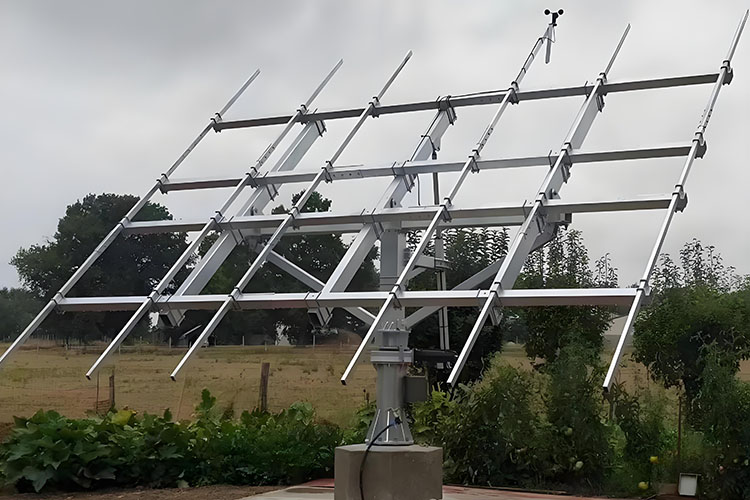
Dual-Axis Trackers (13.19% market share, fastest growing):
- Energy gain: 30-40% over fixed-tilt systems
- CAGR: 17.32-29.20% (fastest growing segment)
- Applications: Agrivoltaics, high-value installations, off-grid systems
- Challenges: Higher initial investment, complex maintenance
- Innovation: AI-powered positioning, terrain-adaptive software
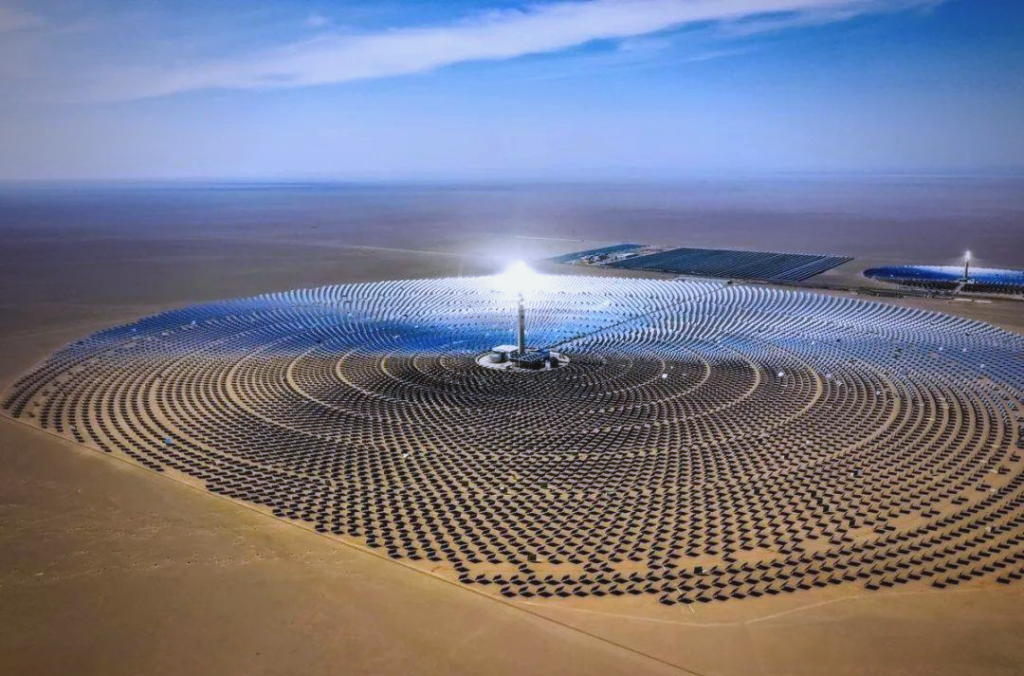
Concentrated Solar Power (CSP) Market Parallel
The CSP market runs parallel to photovoltaic tracking systems, with distinct applications and growth patterns:
Global CSP Market Size:
- 2025: USD 7.84-10.17 billion (varying estimates)
- 2026: USD 9.78-12.11 billion
- 2034-2035: USD 30.74-191.44 billion (varying long-term projections)
- CAGR: 9.7-18.24%
Regional CSP Distribution (2025-2026):
- Middle East & Africa: 46.28% market share (UAE, Morocco, South Africa)
- Asia Pacific: Fastest-growing region (China, India)
- North America: USD 9.63-9.72 billion (U.S. leading with 1,741 MW installed)
- Europe: Spain dominates with proven parabolic trough technology
CSP Technologies:
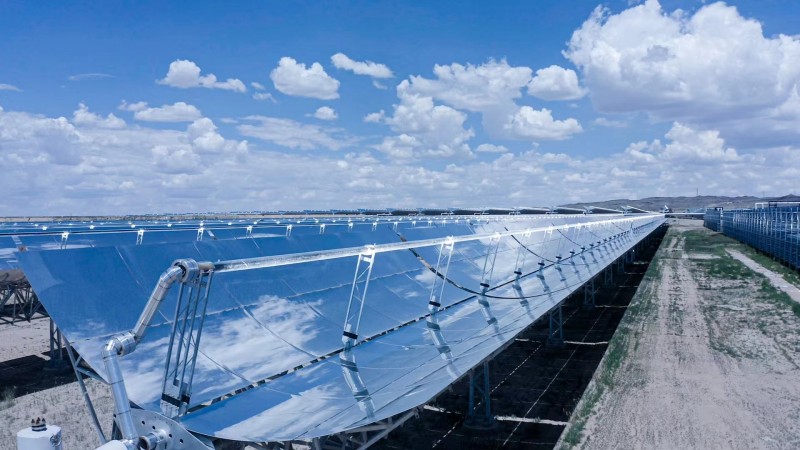
- Parabolic Trough: Market leader due to technological maturity
- Power Tower: Growing for high-temperature applications
- Linear Fresnel: Emerging for industrial heat
- Parabolic Dish: Niche applications
Key CSP Projects and Trends (2026):
- Mitsubishi Heavy Industries advancing high-temperature thermal storage integration
- Zeo Energy acquired Heliogen for hybrid PV+CSP platforms
- ACWA Power and BrightSource Energy collaborating on Middle East projects
- NREL projects CSP CAPEX declining from USD 7,912/kWe (2022) to USD 5,180/kWe (2030)
- Molten salt storage enabling 24-hour dispatchable renewable power
Market Drivers and Future Outlook
Primary Growth Drivers:
- Government policies and renewable energy mandates
- Bifacial module adoption requiring optimized tracking
- AI and machine learning reducing O&M costs by 22-40%
- Thermal storage integration providing grid stability
- Declining technology costs improving project economics
Challenges:
- High upfront installation costs compared to fixed-tilt
- Steel price inflation (15-20% in 2024-2025) impacting bills of materials
- Complex maintenance requirements for dual-axis systems
- Terrain limitations requiring adaptive technologies
Future Trends:
- Hybrid solar plants combining PV tracking with CSP thermal storage
- IoT-enabled diagnostic features for remote monitoring
- Terrain-adaptive software for non-uniform installations
- Agrivoltaic dual-axis systems supporting agricultural co-production
- Vertical integration and regional partnerships strengthening supply chains
Main point
The 2026 solar tracking system market demonstrates robust global expansion led by China, the United States, and India, with single-axis trackers commanding 86.81% market share while dual-axis systems experience the fastest growth. The parallel CSP market, valued at approximately USD 9.78-12.11 billion in 2026, complements photovoltaic tracking with dispatchable thermal storage solutions. As AI-driven optimization, bifacial module synergy, and hybrid renewable configurations mature, solar tracking technologies will continue capturing dominant shares of new utility-scale installations worldwide, cementing their role as essential infrastructure for the global energy transition.