
Le solar panel tracker industry has entered an unprecedented expansion phase in 2026, with dual-axis solar tracking systems emerging as the single most transformative technology in the renewable energy landscape. As nations worldwide accelerate their decarbonization commitments, the demand for high-efficiency solar panel tracker solutions—particularly dual-axis configurations that deliver 30–40% more energy yield than fixed-tilt systems—is reshaping project portfolios across every continent.
Market Overview: Dual-Axis Solar Panel Tracker Market Hits Record Highs
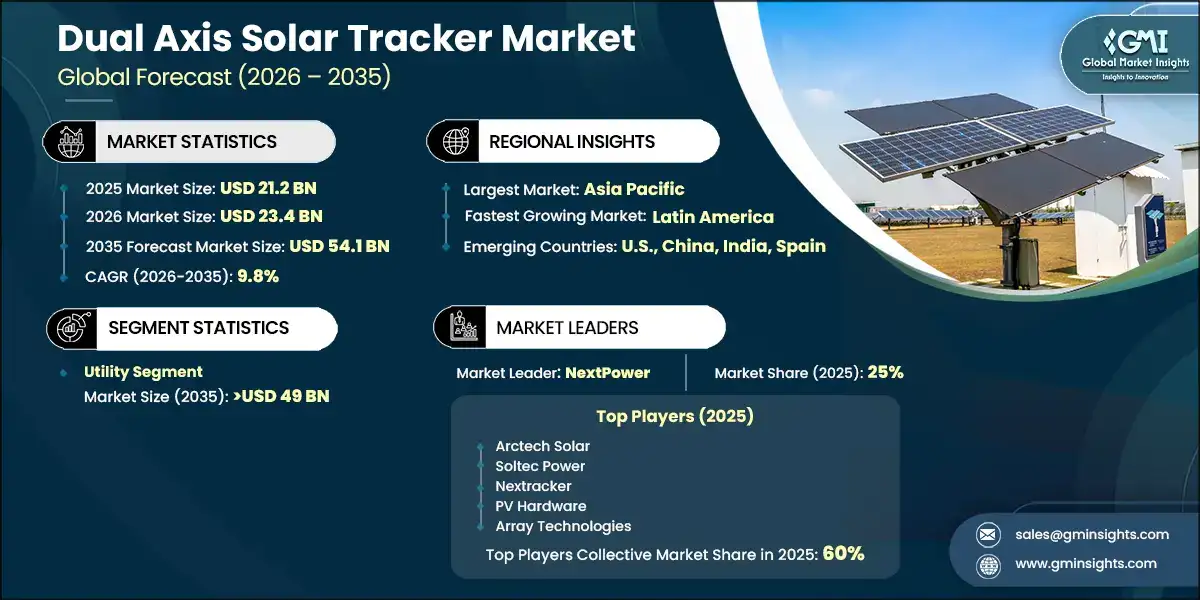
The global dual-axis solar panel tracker market reached approximately USD 23.4 billion in 2026, reflecting robust year-over-year expansion from USD 21.2 billion in 2025. With a projected CAGR of 9.8% through 2035, the market is on track to hit USD 54.1 billion by 2035. The dual-axis solar panel tracker segment specifically is experiencing the fastest growth within the broader tracker market, with a CAGR of 17.32%, driven by its superior ability to track both azimuth and elevation angles throughout the day.
Unlike single-axis trackers that only rotate horizontally, dual-axis solar panel trackers adjust both horizontally and vertically, maintaining optimal perpendicular alignment with the sun from sunrise to sunset. This dual-degree-of-freedom movement enables solar panel tracker systems to capture maximum irradiance during morning and evening hours when single-axis systems suffer from cosine losses. The result is significantly higher energy yield—typically 35–45% above fixed-tilt et 8–15% above single-axis configurations—making dual-axis the preferred choice for premium utility-scale projects where land and efficiency are critical factors.
North America: Dual-Axis Solar Panel Tracker Deployment Accelerates
North America continues to lead the global solar panel tracker market, generating USD 4.13 billion in 2026 and representing over 32% of global installations. The United States remains the epicenter of solar panel tracker demand, with annual installations forecast to exceed 40 GW by 2026. Major solar panel tracker manufacturers including Nextracker, Array Technologies, and GameChange Solar have strengthened their supply chains, with Nextracker alone commanding 22% of global tracker shipments.
Key developments in H1 2026 include PV Hardware’s USD 50 million investment in two new manufacturing facilities in Houston, Texas, aimed at expanding U.S. solar panel tracker production capacity. This expansion underscores the region’s commitment to localized manufacturing amid growing project demand for dual-axis solar tracking systems.
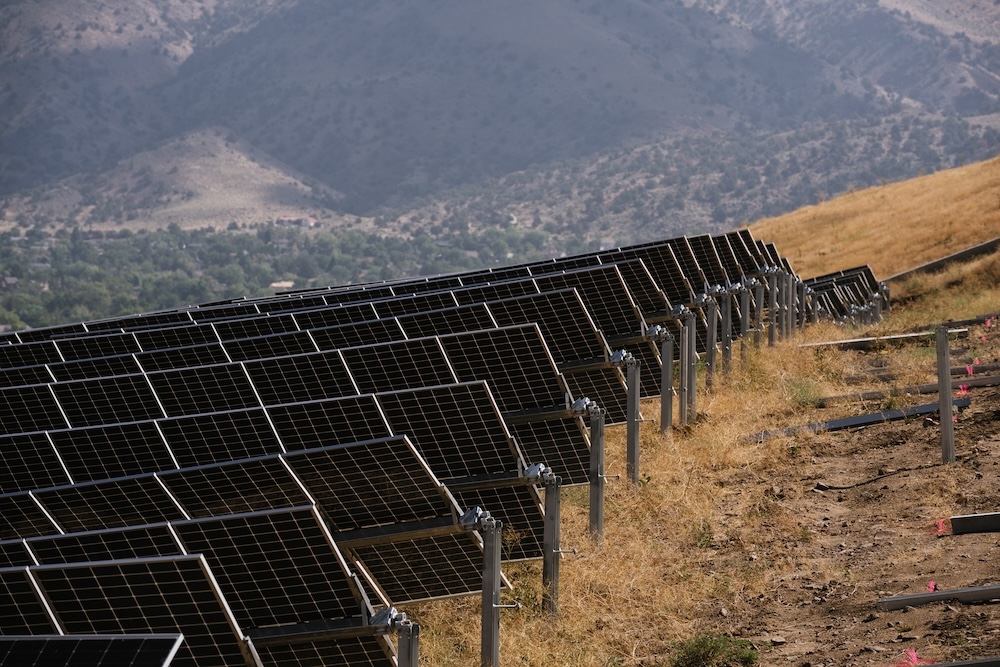
In the U.S. Southwest, several landmark dual-axis solar panel tracker projects have broken ground in H1 2026. These projects leverage the region’s exceptional solar resources—often exceeding 2,000 kWh/m²/year—where the additional energy yield from dual-axis solar panel trackers translates directly into superior ROI. The combination of high irradiance and advanced dual-axis tracking systems enables developers to maximize energy density per acre, a critical advantage as land availability becomes increasingly constrained.
Asia-Pacific: The World’s Largest Dual-Axis Solar Panel Tracker Market
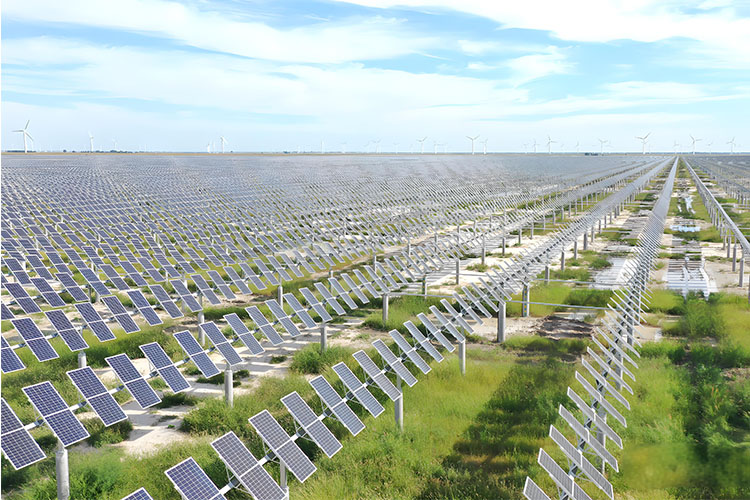
Asia-Pacific has firmly established itself as the largest regional market pour dual-axis solar panel trackers, driven by massive utility-scale deployments in China and India. China’s solar panel tracker market is expected to grow by approximately 50%, from 6 GW to 10 GW through the forecast period, while India’s market is projected to reach 12 GW by 2030.
In H1 2026, Arctech Solar—holding 32% of the APAC solar panel tracker market share—announced the deployment of its dual-axis tracking systems for large-scale renewable energy projects in the Middle East, further expanding its regional footprint. Meanwhile, TrinaTracker introduced smart solar panel tracker portfolio enhancements designed to improve operational performance and energy generation for utility-scale projects.
China’s domestic dual-axis solar panel tracker market has seen explosive growth in H1 2026, with major state-owned enterprises deploying dual-axis tracking systems across the Gobi Desert and Inner Mongolia regions. These projects utilize advanced dual-axis solar panel trackers with self-cleaning mechanisms and high wind-load resistance—critical features for the harsh desert environments where dust accumulation and extreme weather pose significant operational challenges. The Chinese government’s 14th Five-Year Plan target of 1,200 GW of renewable capacity by 2030 has directly fueled demand for premium dual-axis solar panel tracker solutions that maximize energy output per installed watt.
India’s dual-axis solar panel tracker adoption has accelerated following the success of pilot projects at the National Institute of Solar Energy (NISE). Field tests demonstrated that dual-axis solar tracking systems can increase energy yield by 35–42% compared to fixed-tilt installations in Indian climatic conditions, where high diffuse radiation and seasonal sun-angle variations favor dual-axis tracking. Several 100+ MW projects utilizing dual-axis solar panel trackers have entered the construction phase in Rajasthan and Gujarat in H1 2026.
Europe: Dual-Axis Solar Panel Trackers Maximize Efficiency in Constrained Spaces
Europe contributed 19.07% of the global solar panel tracker market in 2025, with a valuation of USD 2.06 billion, and is projected to reach USD 2.45 billion in 2026. Southern European countries—Spain, Italy, Portugal, and Greece—benefit from high solar irradiation, making dual-axis solar panel tracker systems particularly effective.
Spain remains the largest European solar panel tracker market, estimated at USD 0.72 billion in 2025, supported by strong governmental auction programs and grid-access reforms. The Spanish market has shown particular appetite for dual-axis solar panel trackers in concentrated solar power (CSP) hybrid projects, where dual-axis tracking systems are used to maximize thermal energy collection for both photovoltaic and thermal storage applications.
Germany and the UK are also experiencing steady growth in solar panel tracker adoption, with Germany projected to reach USD 0.49 billion and the UK USD 0.29 billion by 2026. The European market is increasingly adopting dual-axis solar panel trackers to maximize efficiency in land-constrained regions. Bifacial modules paired with dual-axis tracking systems unlock their full energy potential by ensuring optimal rear-side irradiance capture throughout the day—a combination that has demonstrated 45–50% energy yield gains over fixed-tilt monofacial systems in European test conditions.
In H1 2026, several European agrivoltaics projects have adopted dual-axis solar panel trackers to enable dynamic shading control for crops beneath the arrays. The ability of dual-axis tracking systems to adjust tilt angles seasonally—providing more shade in summer and allowing maximum light penetration in winter—has proven particularly valuable for high-value agricultural operations in France and Italy.
Middle East & Latin America: Dual-Axis Solar Panel Tracker Hotspots Emerge
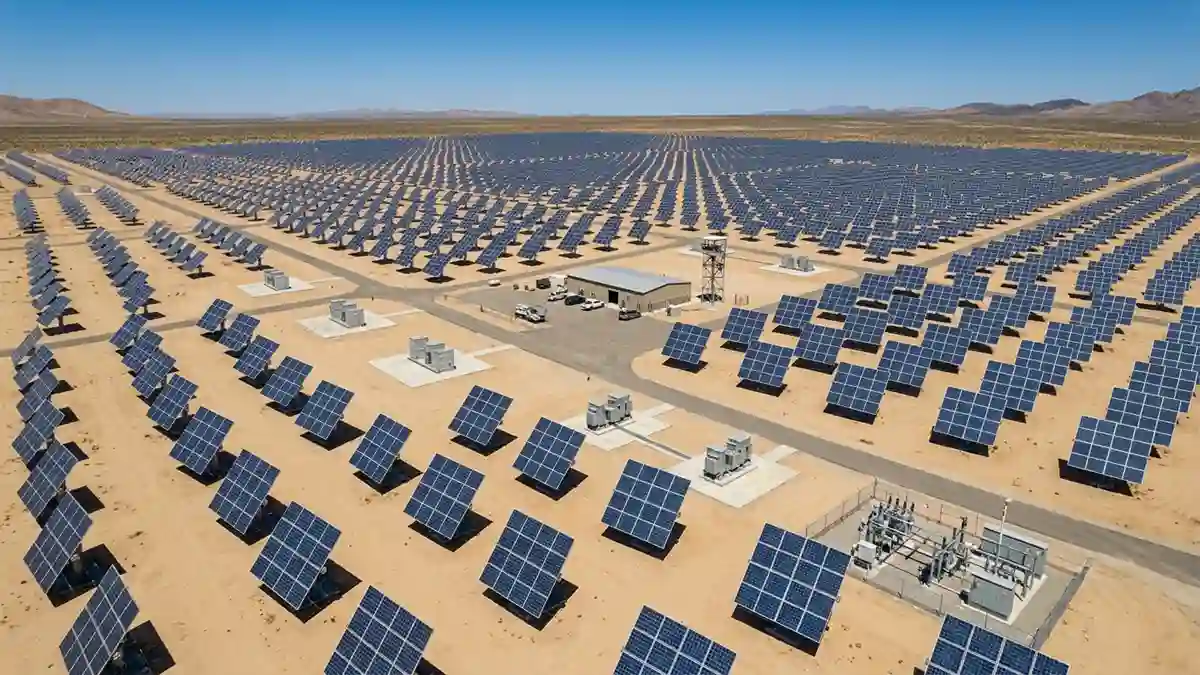
The Middle East is rapidly becoming a hotspot for dual-axis solar panel tracker deployment. Masdar’s 5.2 GW Sadawi solar project in Saudi Arabia exemplifies the region’s massive renewable energy ambitions. Large-scale projects are expected to come online between 2028 and 2030, with dual-axis solar panel trackers playing a critical role in maximizing energy capture in high-irradiance desert environments where DNI (Direct Normal Irradiance) often exceeds 2,500 kWh/m²/year.
In the UAE, the Al Dhafra 2 GW solar project has incorporated dual-axis solar tracking systems in its Phase II expansion, recognizing that the additional 12–15% energy yield de dual-axis solar panel trackers significantly improves project economics in a region where financing costs are competitive and solar resources are virtually unlimited.
Latin America is identified as the fastest-growing region pour dual-axis solar panel trackers. Countries like Brazil and Mexico are expanding their utility-scale solar portfolios, with Mexico’s solar panel tracker market expected to exceed 1 GW per year from 2028 onwards. Chile’s Atacama Desert—home to the world’s highest solar irradiance—has become a proving ground for dual-axis solar panel tracker technology, with several 500+ MW projects utilizing advanced dual-axis tracking systems to achieve capacity factors exceeding 35%.
Dual-Axis Solar Panel Tracker Technology: AI and Smart Tracking Revolution
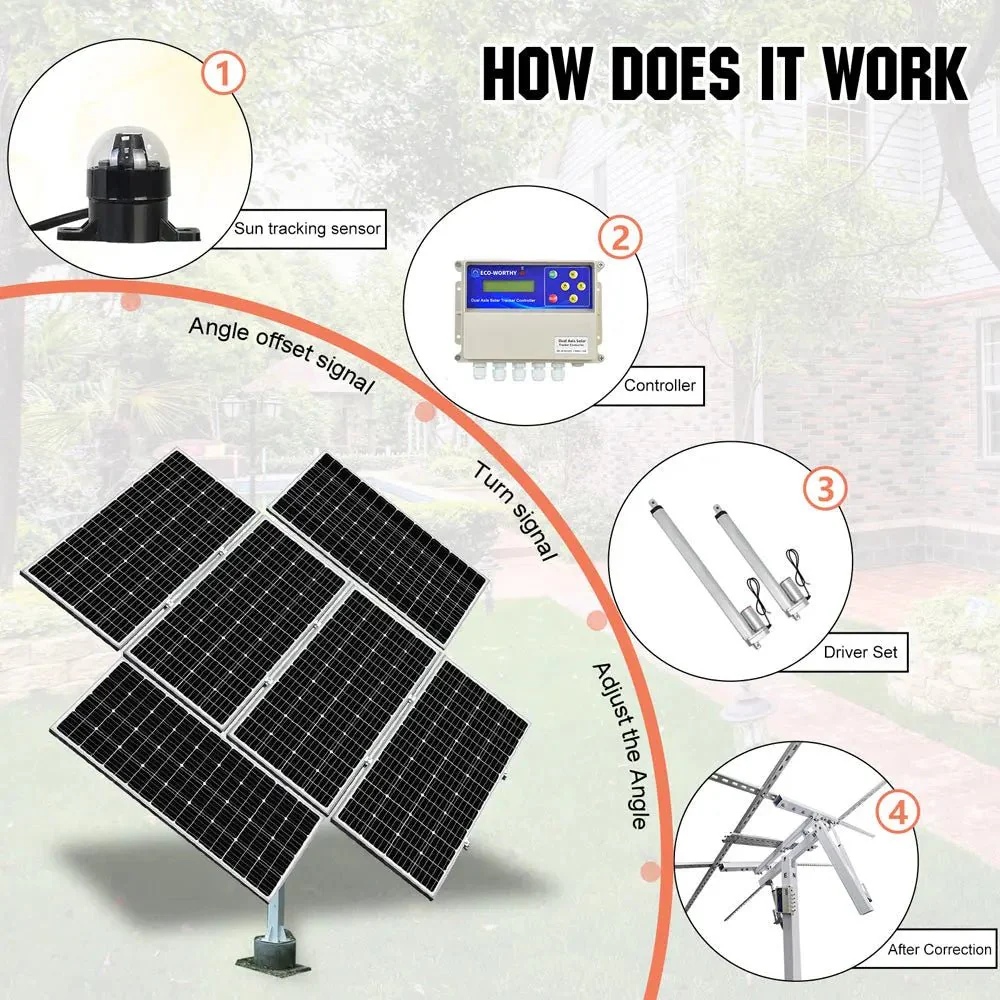
In 2026, the solar panel tracker industry is witnessing a technological revolution centered on dual-axis tracking systems. Leading manufacturers are integrating predictive controls, weather forecasting, and machine-learning algorithms to maximize plant output. Hybrid sensor-GPS dual-axis tracking systems—combining real-time light sensor feedback with GPS-based sun position calculations—are gaining traction for their enhanced accuracy and reduced maintenance requirements.
Advanced dual-axis solar panel trackers now feature backtracking algorithms that prevent row-to-row shading during low sun angles, stow-mode positioning that automatically flattens arrays when wind speeds exceed design thresholds, and snow-shed mode that tilts modules to steep angles to accelerate snow removal in cold climates. These intelligent features have significantly improved the reliability and operational uptime of dual-axis solar panel tracker systems.
In September 2025, Andhra University in India introduced novel hybrid-integrated tracking algorithms for dual-axis solar panel tracker systems, validating both sensor-based and sensor-less approaches through laboratory-scale experiments. These innovations are expected to drive further adoption by improving reliability and reducing operational costs of dual-axis tracking systems.
The integration of IoT sensors et cloud-based monitoring en dual-axis solar panel tracker systems has enabled predictive maintenance capabilities that reduce O&M costs by up to 25%. Real-time monitoring of motor current, bearing temperature, and wind load data allows operators to identify potential failures before they occur—a critical advantage for dual-axis tracking systems with their more complex mechanical architecture compared to single-axis alternatives.
Key Dual-Axis Solar Panel Tracker Projects and Market Leaders
The competitive landscape for dual-axis solar panel trackers features global leaders such as Nextracker, Array Technologies, Arctech Solar, TrinaTracker, Soltec, and PV Hardware. In 2023, the top four companies supplied 59% of trackers globally, with the market becoming less consolidated as regional players gain ground.
Notable H1 2026 developments in the dual-axis solar panel tracker sector include:
- Arctech Solar: Expanded Middle East project deployments with advanced dual-axis tracking systems, including the supply of 1.5 GW de dual-axis solar panel trackers for Saudi Arabian projects
- TrinaTracker: Enhanced smart solar panel tracker portfolio with AI-driven dual-axis tracking algorithms for utility-scale applications
- Ideematec: Expanded global project footprint through new dual-axis solar panel tracker supply agreements across Europe and Latin America
- PV Hardware: Invested USD 50 million in U.S. manufacturing expansion specifically targeting dual-axis solar panel tracker production capacity
- Soltec: Launched next-generation dual-axis solar panel tracker platform with integrated energy storage mounting capabilities, enabling seamless hybrid solar-plus-storage deployments
Conclusion: The Dual-Axis Solar Panel Tracker Era Has Arrived
The first half of 2026 has marked a pivotal moment for the dual-axis solar panel tracker industry. With North America leading in absolute market value, Asia-Pacific dominating in volume, Europe maximizing efficiency in constrained spaces, and the Middle East and Latin America emerging as high-growth frontiers, the global solar panel tracker market is experiencing unprecedented expansion.
The superior energy yield, declining costs, and technological maturity of dual-axis solar tracking systems have positioned them as the technology of choice for next-generation utility-scale solar projects. As AI-driven smart tracking, hybrid sensor technologies, and localized manufacturing continue to mature, dual-axis solar panel trackers are positioned to play an increasingly central role in the world’s transition to clean energy—delivering the maximum possible energy from every ray of sunlight that reaches the Earth’s surface.