Divergent Paths of the Sun: Structural and Mechanical Differences Between Single-Axis PV, Dual-Axis PV, and Solar Thermal Trackers
As the global demand for renewable energy intensifies, the efficiency of solar harvesting systems has become paramount. While stationary panels are cost-effective, tracking systems that follow the sun’s diurnal and seasonal arcs can increase energy yield by 20% to 40%. However, the engineering solutions differ significantly between photovoltaic (PV) systems and concentrating solar thermal systems. This essay details the structural and mechanical principles of three common types: single-axis PV trackers, dual-axis PV trackers, and solar thermal trackers (specifically parabolic trough and power tower heliostats).
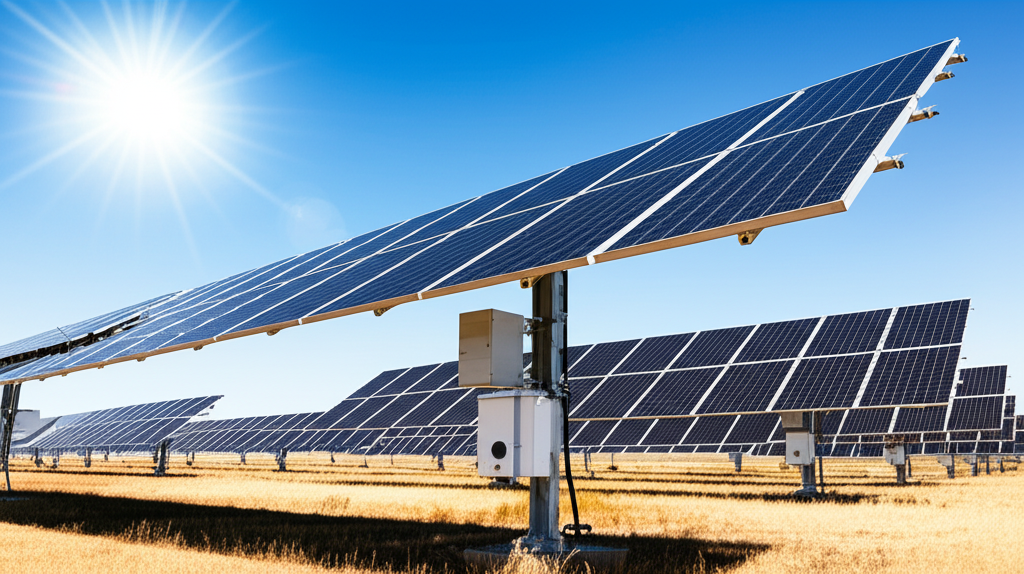
Single-Axis PV Trackers: The Workhorse of Utility-Scale Solar
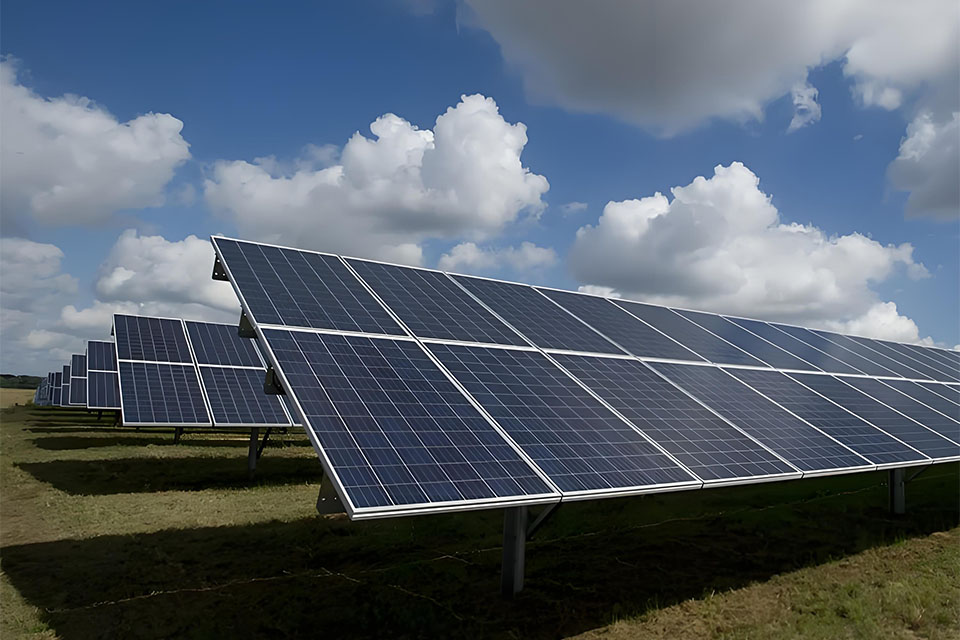
The single-axis PV tracker is the most common tracking system for large photovoltaic farms. Structurally, it consists of a horizontal or sometimes tilted primary torque tube (a long, tubular steel beam) supported by a series of vertical piers or posts embedded in concrete foundations. Rows of standard PV modules are mounted lengthwise onto this torque tube. The key structural feature is its simplicity: one degree of freedom, typically rotating around a north-south axis.
The principle of operation is purely astronomical. An algorithm based on GPS coordinates and time calculates the sun’s changing azimuth (east-west position) throughout the day. An electric motor, usually a slew drive or linear actuator located at one or multiple points along the row, rotates the torque tube. This rotation “tracks” the sun from east to west, maximizing the direct component of sunlight falling on the panels. Mechanically, wind loads are a critical design factor; in “stow” mode (high winds), the actuators rotate the panels to a flat, horizontal position to minimize structural stress. The structure does not adjust for the sun’s altitude (vertical angle), leading to a cosine loss that increases in winter. However, its low structural complexity (fewer motors and controllers per megawatt) makes it the most economical choice for flat, open terrains.
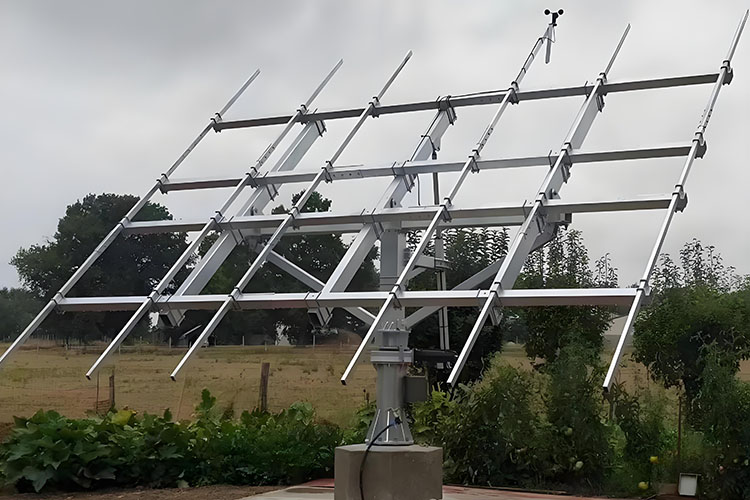
Dual-Axis PV Trackers: Precision for Maximum Yield
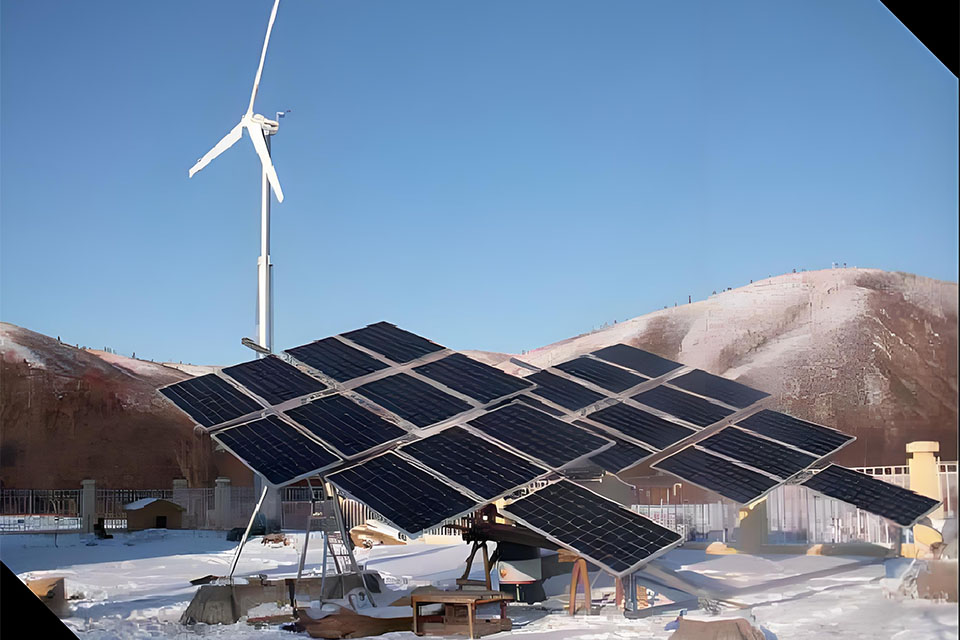
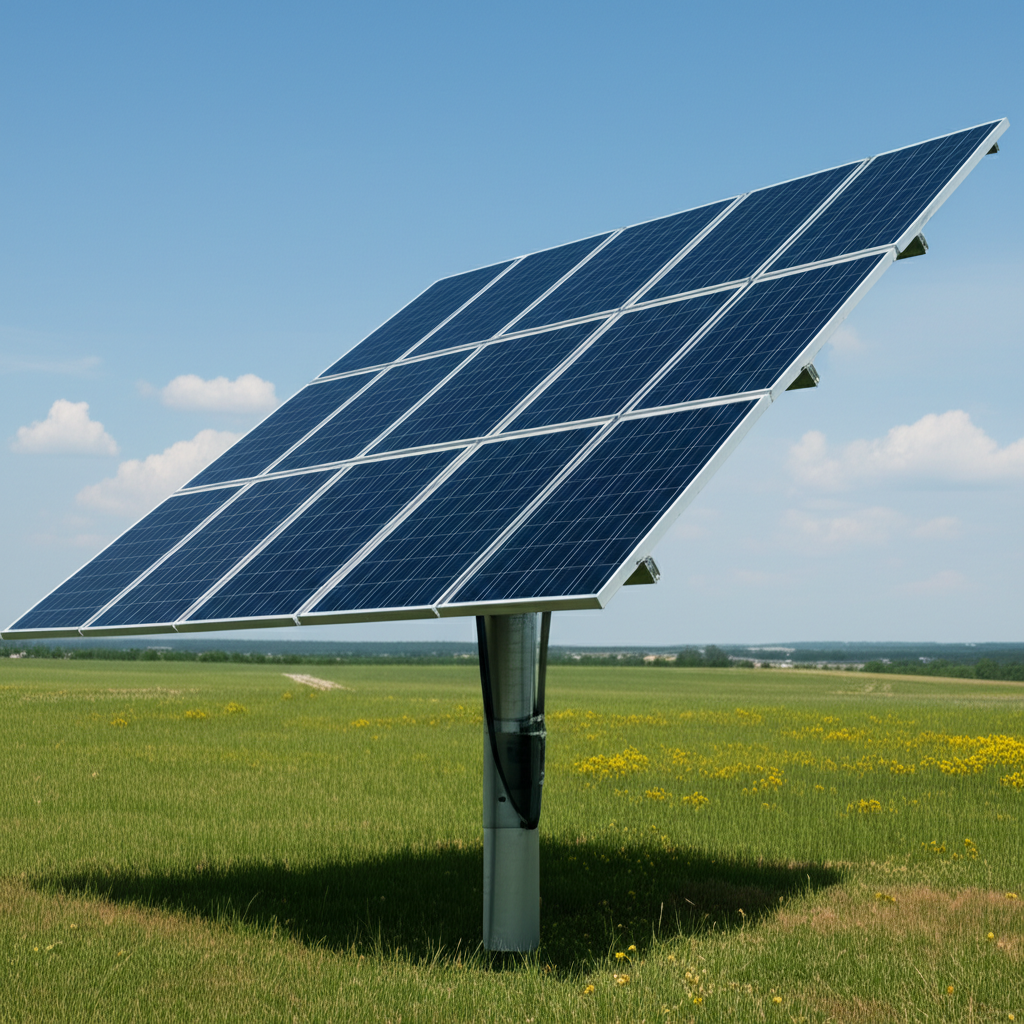
Dual-axis PV trackers maintain the PV module but add a second axis of rotation, allowing the panel to face the sun directly at all times—perpendicular to the incoming rays. Structurally, these are far more complex. They typically feature a central vertical mast (fixed to a concrete foundation) supporting a horizontal beam. The PV array is mounted on a top platform. The first mechanism (often a large slew bearing and gearbox) rotates the entire top platform around the vertical mast (azimuth axis). The second mechanism (a linear actuator or a second slew drive) tilts the panel array up and down (altitude axis).
The working principle is that of a full celestial tracker. The control unit calculates both the sun’s azimuth and its elevation (altitude) relative to the site. At dawn, the azimuth drive swings the entire structure to face east, while the altitude drive adjusts the tilt for the sun’s low angle. At noon, the panel is nearly flat; by afternoon, it swings westward while tilting back. The structural difference from single-axis is immense: dual-axis trackers must support heavy torsional loads from wind applying leverage against the top-heavy panel array. Consequently, the mast and slew drives are heavily reinforced with steel and robust bearings. Mechanically, they offer up to 40% more annual energy per panel than fixed-tilt systems, but this comes with high maintenance (two wear-prone gearboxes) and the need for a larger land area to prevent inter-row shading.
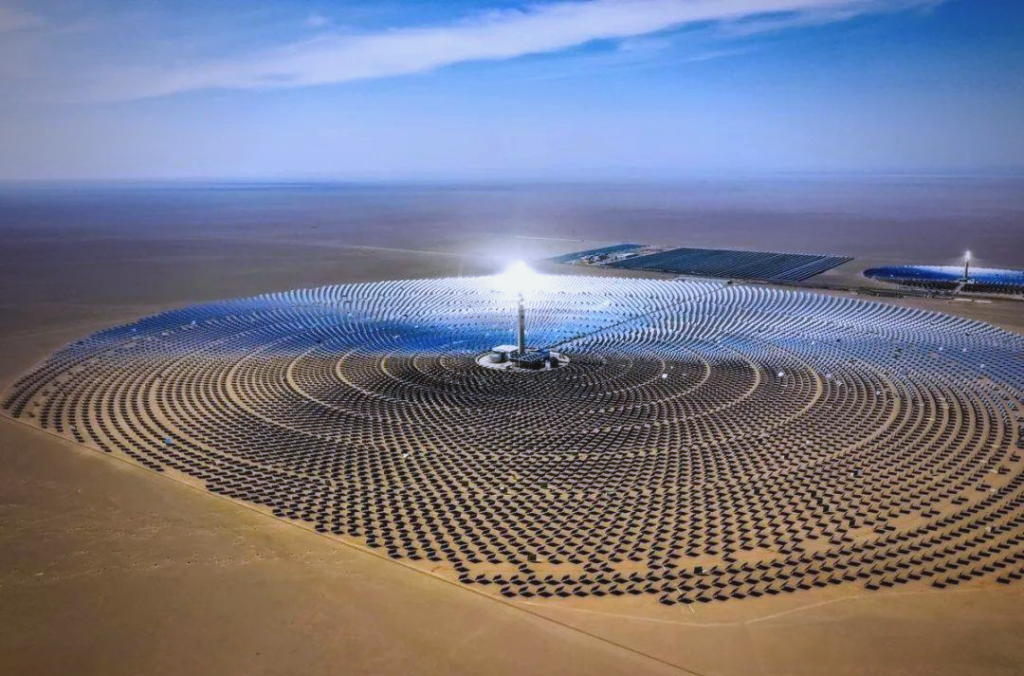
Solar Thermal Trackers: The Focus of Intense Heat
Solar thermal trackers serve a different purpose: concentrating sunlight to generate heat, not electricity directly. Two primary structures exist: the parabolic trough and the heliostat field for a central receiver tower.
For a parabolic trough system, the tracker structure superficially resembles a single-axis PV tracker—a long torque tube with a supporting pylon. However, the load is dramatically different. Instead of flat panels, the structure holds a large, curved parabolic mirror (often made of silvered glass or polished metal). The rotating axis (north-south) aligns with the tube running through the parabola’s focal line. A metal tube (the receiver) containing heat-transfer fluid is fixed along this focal line, held by support arms extending from the structure. The principle is one-dimensional tracking (east-west). The structure rotates the entire parabolic mirror so that the sun’s rays always hit the reflective surface parallel to its axis and are concentrated onto the fixed receiver tube. Mechanically, precision is far stricter than PV single-axis: a 0.5-degree misalignment can cause the concentrated heat (temperatures up to 400°C) to miss the receiver, melting the support structure. Hence, these trackers use high-precision slew drives and rigid, distortion-resistant steel frames.
Le heliostat (for a central receiver tower) is structurally the most demanding. Each heliostat is a large, flat or slightly curved mirror mounted on its own dedicated dual-axis tracker. The structure is a heavy steel frame anchored to a deep foundation. The driving principle is entirely different: it does not track the sun’s path directly. Instead, it must maintain a continuously varying reflection angle so that sunlight is always rebounded to a fixed point on a distant central tower. Mechanically, this requires two high-torque, high-precision axes (azimuth and altitude). However, the control algorithm is far more sophisticated than a PV dual-axis. It must calculate the sun’s position, the heliostat’s position, and the receiver’s position, then solve for the bisector vector to determine the required mirror orientation. Structurally, heliostats are built to withstand high wind loads and thermal distortion because even a slight deflection can project the beam off the small target (often 10-15 meters wide) hundreds of meters away.
In summary, while all three systems aim to harvest solar energy, their structures and mechanisms diverge based on the desired output. The single-axis PV tracker is a robust, low-cost structure optimized for sheer area coverage. The dual-axis PV tracker is a more complex, top-heavy mast mechanism designed for maximum electrical yield per panel. The solar thermal tracker—whether the trough’s precision parabolic frame or the heliostat’s dynamically calculating double-axis mount—is built not just for alignment with the sun, but for the rigorous focusing of intense, high-temperature energy onto a fixed receiver. Each architecture reflects a unique engineering compromise between structural integrity, mechanical complexity, and the physical demands of sunlight conversion.